Last spring, I assisted my sister in turning around her cluttered second-floor closet in a San Francisco Victorian. What started as a quick afternoon of sorting soon became a full weekend of careful measuring, planning, and sketching. We eventually installed a modular system, making every dress and shoe instantly accessible. By Sunday evening, the closet had taken on the feel of a mini-boutique, making her morning routine far more efficient.
Walk In Closets Designs
This guide examines Walk In Closets Designs that can increase storage, simplify organization, and improve the appearance and function of your home. Whether you are planning a complete closet remodel or a smaller makeover, you will find helpful ideas and design principles. These concepts can work for homeowners and renters across the country.
We discuss key steps like planning and measuring, as well as design principles. You will learn the benefits and limits of custom and modular closet systems. It also includes practical solutions for small spaces and styling tips for creating a boutique-inspired look. For product ideas, you may visit www.organizercloset.com for closet organizer systems and accessories.
Key Takeaways
- Walk In Closets Designs can turn cluttered areas into highly functional, boutique-style closets.
- Effective closet design supports a balance between hanging, shelving, and drawer space for daily convenience.
- Accurate measurement and inventory are critical before embarking on a closet remodel or makeover.
- Decide between custom, built-in solutions and flexible modular systems based on your budget and needs.
- Small closets benefit from vertical storage, corner solutions, and organized storage accessories.
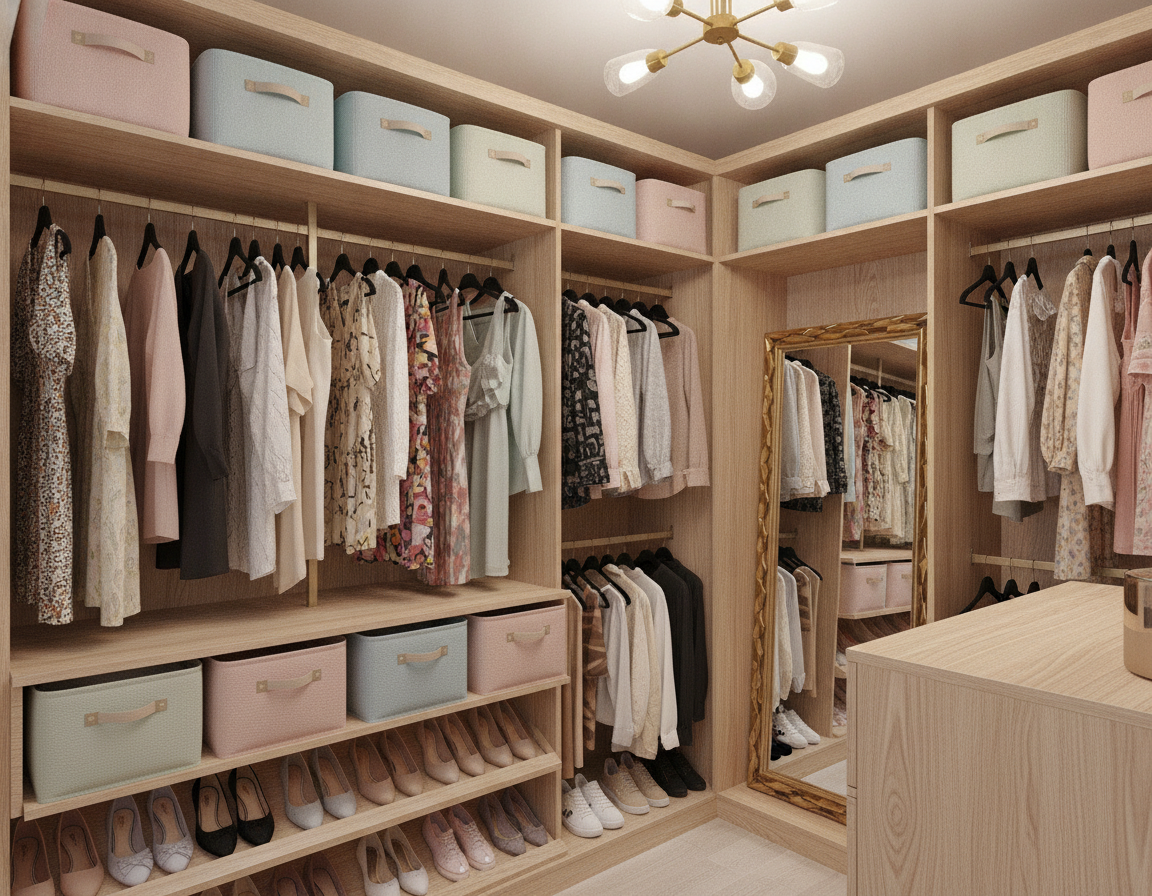
How To Plan Your Walk-In Closet By Measuring Space And Assessing Needs
Beginning a walk-in closet project works best when you start with useful information and simple layout tests. Start by listing your belongings and measuring the space accurately. Consider how the space will be used. This step is essential when deciding between pre-made closet systems and custom designs.
Create A Complete Inventory Of Closet Items
Make a list of all your clothing items: shirts, dresses, coats, and suits. Be sure to include shoes, handbags, belts, ties, scarves, jewelry, and other accessories. Include seasonal items, luggage, safes, and keepsakes that might go in the closet. Check other storage areas like basements, guest rooms, and attics to ensure your plan covers all your needs.
Measure Current Storage Usage And Available Dimensions
Measure how much width your hanging clothes use, since a row of shirts may require 36″ or more. Record the vertical space required for long items such as dresses, which may need around 52″ of clearance. Also, measure the depth of your shoes and the shelf space you’ll need.
Draw each wall in 2-D on graph paper, using a simple scale such as 1 cm = 2 ft for fast planning. Remember to include ceiling height, door swings, built-ins, and any other obstructions. Use blue painter’s tape on the wall or floor to test hanging depth, aiming for roughly 24″.
Consider Accessibility And User Habits
Record the heights of primary users to set rod and shelf heights for comfortable use. Place frequently used items at easy-to-reach levels. Reserve top shelves for seasonal storage, with a spot for a step stool below.
Decide if you prefer a stylish or purely functional closet layout. Reflect on past issues to avoid them. Plan for a full-length mirror, a hamper or dirty-clothes cabinet, and outlets for LED lighting or charging devices.
In small spaces, look into compact closet solutions. Compare different closet systems, especially options with drawers for mixed storage. If you plan to do the project yourself, review the materials, tools, and hardware needed for a DIY build.
Walk In Closets Designs: Core Design Principles
Effective closet design begins with a clear purpose. Organize items into zones like workwear, casual, shoes, and accessories. A focal point, like an armoire-style hutch or a large mirror, can improve the feel of the space. It also guides the placement of closet cabinets and systems.
Plan the layout so each zone works as practically as possible. Keep daily wear near the entrance for quick and easy access. Use deeper shelves for seasonal or less frequently used items. A standout element, like custom drawers or display shelving, adds intentionality and supports organization.
Balance Hanging, Shelving, And Drawer Space
Consider your storage needs. Use hanging for suits, dresses, and coats. Shelves work well for folded clothing, handbags, boxes, and baskets. Drawers conceal smaller items and help keep the closet looking tidy. Careful planning of drawer quantity and placement makes maintenance easier and complements built-in systems or freestanding cabinets.
Make Use Of Vertical Space And Corner Solutions
Maximize wall height with top shelves for off-season storage. Adjustable shelving provides flexibility. Corners can be challenging without the right solutions; use corner units, lazy Susans, or specialty organizers. Clear acrylic drawers and risers allow for safe stacking and visibility.
Design choices impact functionality and cost. Fixed shelves can be cost-effective and work well with standard baskets. Adjustable shelving is more versatile and supports future changes. Custom designs are often ideal for unusual dimensions, premium finishes, or highly specific storage needs.
| Closet Design Need | Recommended Solution | Why This Works |
|---|---|---|
| Frequent outfit changes | Accessible drawers with double hanging rods | Increases hanging space while keeping essentials close at hand |
| Seasonal rotation | Upper shelves with labeled bins | Moves seasonal items upward while freeing lower storage zones |
| Compact floor area | Corner closet organizer and open shelving | Uses difficult corners while keeping items visible |
| Premium closet display | Custom closet cabinets paired with integrated lighting | Combines luxury display with practical closet system integration |
| Cost-conscious adaptability | Modular systems with flexible shelving | Offers future adaptability and easier installation compared to full custom builds |
Strong closet solutions combine good looks with practical function. Whether opting for modular systems or custom designs, plan zones, mix storage types, and utilize vertical and corner spaces. This approach helps create a organized walk-in closet.
Custom And Modular Closet Systems: Options, Benefits, And Best Uses
The best closet plan balances form with practical function. Start by weighing permanence, budget, and finish preferences. A custom closet provides a precise fit and tailored features. Modular closet systems give flexibility and quicker closet installation when needs evolve.
Comparing Built-In And Modular Choices
Built-in units are framed into walls and can match trim and millwork for a seamless look. Homeowners seeking a high-end finish and long-term solution often choose built-ins. A custom closet company can manage measurements, design, and installation for a polished result.
Modular closet systems usually arrive as pre-made components that you assemble yourself or have installed. These systems work well for renters, phased budgets, and homeowners who want the option to reconfigure later. Many modular lines include adjustable shelves, hanging rods, and ready-made drawer modules.
Drawer options and organizer features
Choosing a closet system with drawers adds hidden storage for folded garments, undergarments, and small accessories. Closet systems with drawers can improve daily usability and reduce visible clutter.
Look for built-in organizers such as jewelry trays, tie dividers, belt storage, and valet rods. Islands and benches with drawers can increase storage in larger closets. Professional installers commonly include drawer options as part of the standard package.
Choosing Materials, Finishes, And Hardware
Material choices affect durability and style. Premium composite wood with laminate or woodgrain finishes can resist wear while imitating the look of solid wood. Choose finishes ranging from crisp white to warm oak tones to coordinate with bedroom décor.
Hardware choices—handles, glass fronts, and specialty pulls—shape the final look. Glass doors and polished brass pulls heighten a boutique feel. Select finishes during the design consultation to make sure they coordinate with furniture, trim, and surrounding décor.
How Features And Value Compare
| Comparison Feature | Custom Closet Option | Modular Closet System |
|---|---|---|
| Fit | Tailored fit to the exact space | Works well for standard dimensions and changing layouts |
| Cost | Higher starting investment | Budget-friendly options often available |
| Installation approach | Usually installed by professional closet installers | Quicker setup and possible DIY assembly |
| Features | Custom features and tailored drawers | Wide range of pre-designed drawers and organizers |
| Home resale impact | Can strongly improve appeal when designed properly | Neutral to positive, depends on quality |
When looking for professional help, try searches like custom closets near me to compare local closet companies. A solid conversation with a custom closet organizer or designer clarifies what fits your lifestyle and budget.
Storage Maximization For Small And Challenging Spaces
Small walk-in closets can feel tight, yet smart planning turns them into efficient, calm spaces. Aim for a layout that squeezes every inch of usable wall and vertical space. Think in terms of zones for hanging, folded items, and shoes to improve small closet organization without crowding the floor.
Effective layout ideas often begin with shallow shelves and double-hang rods for shirts and pants. An L-shaped or U-shaped arrangement uses perimeter walls for maximum storage. For added seating or hidden storage, choose a narrow bench that fits the available footprint.
Practical Layout Ideas For Small Walk-In Closets
Use shallow shelves 12″ deep for baskets and folded items. Place double-hang rods on one wall for tops and bottoms, and reserve a single long rod for dresses. Consider stacking vertical cubbies for accessories to keep surfaces clear.
Space-Saving Closet Organizers And Accessories
Back-of-door organizers modeled on Elfa systems give immediate gain in usable space. Add accessory hooks to hanging rods for bags, scarves, belts, and hats. Use S-hooks, valet rods, drop-front shoe boxes, and clear acrylic drawers to keep items visible, protected, and easy to access.
Plan For Standard Basket And Bin Sizes
Design fixed shelves to fit common bin heights of 8″–11″. Leave about 12″ between shelves as a practical standard for grab-and-go baskets. Shelves a little deeper than 12″ can provide flexible storage for larger bins, towels, and folded linens.
For very narrow footprints, choose a narrow closet organizer or narrow-profile small closet systems. These units can provide tailored fits that look almost built-in. Small custom closets often combine shallow drawers with open shelves to maintain a boutique-style feel.
Prioritize vertical stacking and drawer dividers to get more use from limited depth. File-folding can save drawer space, while wall and door hooks keep everyday items within reach. A compact closet system can turn cramped closets in small bedrooms into usable, stylish storage areas.
| Closet Challenge | Recommended Solution | Suggested Dimensions |
|---|---|---|
| Limited depth | Shallow shelving, 12″ deep minimum; narrow hanging rods | 12″ shelf depth with 16″–18″ hanging clearance |
| Few vertical options | Stacked cubbies, tall open shelving, vertical drawer towers | 8″–11″ bin heights and 72″–96″ tall units |
| Limited floor space | Slim stools, wall shoe storage, and narrow storage benches | 12″–16″ bench depth and 4″–6″ shoe slots |
| Messy accessories | Valet rods, hooks, shelf dividers, and clear boxes | Hooks and rods usually need 2″–4″ clearance; divider height should match the shelf |
| Limited door clearance | Overdoor hooks, hanging shoe pockets, and back-of-door organizers | Typical overdoor pockets of 12″–18″ width and 4″–6″ depth |
Creating A Boutique Feel With Styling And Finishing Touches
A thoughtfully styled closet can feel like a personal boutique. Start with a plan that balances practical function with visual flair. Incorporate lighting, mirrors, furniture, and coordinated accents to achieve a deliberate, luxurious feel without clutter.
Integrate Lighting And Mirrors
Install LED strips in shelves and wardrobe niches during the electrical rough-in stage. Task lighting near a vanity or closet island can improve dressing and makeup routines. Use track lights or recessed spotlights to highlight displays and add visual depth.
A full-length closet mirror or a mirrored door inset expands visual space. Smart bulbs allow you to switch from bright task light to soft mood light with a schedule or voice command. Good closet lighting supports both practical use and atmosphere.
Furniture, Seating, Islands, And Display Features
For larger walk-ins, consider a compact closet island for added surface space and drawers. In smaller spaces, a storage bench or two-drawer unit that doubles as seating can be ideal. Choose closet furniture with matching finishes for a more cohesive look.
Display jewelry on trays or busts and use hanging organizers for necklaces. A small lamp on a vanity or decorative tray on an island can add a boutique-style touch. Thoughtful display can turn everyday items into attractive visual features.
Decor Elements Including Wallpaper, Art, And Coordinated Storage
Use peel-and-stick wallpaper behind open shelving or on the ceiling to introduce pattern without permanence. Hang framed art in unexpected niches to personalize the space. Coordinate bins, baskets, and boxes for a neat and refined appearance.
Label opaque containers so contents stay hidden yet easy to find. Coordinated storage reduces visual clutter and elevates closet styling. Lamps and small decorative items warm the room and emphasize curated luxury closets.
Choose a focal point, such as a drawer bank or hutch, and repeat materials or bin styles to create visual rhythm. A well-placed closet mirror can complement the layout and reflect lighting to brighten the room.
| Closet Element | Purpose | Best Practice |
|---|---|---|
| Built-in LED strips | Illuminates shelves and drawers | Install early; use warm white for clothing and cooler light for task areas |
| Central closet island | Adds a work surface and storage | Select a narrow profile and add drawers for accessories |
| Full-length mirror | Visual expansion and dressing aid | Place opposite a light source and consider mirrored doors |
| Matching storage bins | Conceals items and unifies look | Use matching materials with labels for easy retrieval |
| Wallpaper and framed art | Adds style, personality, and a focal point | Apply to back panels or ceilings to avoid overwhelming the space |
| Programmable bulbs and controls | Supports convenience, moods, and routines | Program a nightlight scene and a bright dressing scene |
How To Plan, Install, And Work With Closet Professionals
Start with detailed sketches and a mockup so you can test dimensions before making changes to any wall. Create a 2-D plan of each wall on graph paper, using a scale like 1 cm = 2 ft. Mark standard shelf and rod depths, such as about 24″ for hanging and 12″ for baskets. Use blue painter’s tape to transfer these measurements to the room, ensuring ergonomics and circulation.
From Sketch To Blue-Tape Mockup
Walk the space with the blue-tape mockup to mentally open drawers. Adjust heights for users of varying heights. Measure clearances for doors, drawers, walking paths, and dressing zones. This low-cost step can reduce surprises during a closet remodel and help you visualize the finished layout.
Choosing A Closet Company Or Installer
Request free in-home design consultations from closet companies. Bring your inventory list and mockup photos. Evaluate each company based on design skill, finish choices, installation services, warranties, financing, and showroom access.
Read local reviews and testimonials for companies such as Closets by Design and other national providers. Inquire about catalog tiers and collections to match budgets. Confirm whether the custom closet company provides both design and professional installation for a smoother process.
Closet Project Costs And Timeline Considerations
Request a written estimate detailing materials, labor, and accessories. Compare cost line items to understand premium composites, laminates, islands, and specialty hardware impacts. Ask about custom closet costs for similar scopes and which choices increase the budget.
Typical walk-in closet installations may finish in one to two days for standard builds. Custom systems may require longer lead times for manufacture and delivery. Obtain a detailed timeline and payment schedule before starting and inquire about financing options.
Professional installers help ensure panels, drawers, and shelves are anchored and aligned for safe long-term use. After installation, the closet is usually ready for immediate use, with warranties applied where available. Use searches like closet installers near me and closet designers near me to compare trade experience and local showroom visits.
If you plan to include DIY elements, research organizers and accessories through resources such as www.organizercloset.com. Compare build-your-own choices against hiring pros to decide if a partial or full closet installation best fits your goals and budget.
Final Conclusion
Starting a walk in closets designs project requires detailed planning. Begin by taking a full inventory, measuring walls and clearances, and sketching out zones for hanging, shelving, and drawers. This approach helps make closet organization more efficient and reduces wasted space during remodeling.
Choose between custom closets or modular systems based on your needs. Focus on maximizing drawer space and use vertical solutions and standard bin dimensions in small closets. Accessories such as pull-out baskets and corner solutions can turn tight spaces into more functional storage areas.
Finish the project with thoughtful lighting, mirrors, and coordinated finishes. Simple styling can elevate your closet to boutique-level standards. Before starting, test layouts with blue-tape mockups, set a budget, and select a reputable installer. Search for closet design near me or local designers to compare quotes, timelines, and service options.
For additional resources, product ideas, and organizer options, visit organizercloset.com. Explore custom closet systems, closet storage systems, and closet installation services to bring your concept to life. This can help create an elegant and highly usable space.
Related: Walk In Closet Drawer Organizers